Thymosin Alpha-1
Also known as Thymosin α1, Thymosin-α1, Tα1
Thymosin Alpha-1 is a 28-amino-acid immunomodulatory peptide that enhances T-cell maturation into CD4+ and CD8+ subsets, activates natural killer (NK) cells, increases major histocompatibility complex (MHC) antigen expression on infected cells for improved viral recognition, and suppresses pro-inflammatory cytokines IL-1β and TNF-α to prevent cytokine-storm pathology—yielding superior antiviral efficacy across hepatitis B/C, HIV, and COVID-19 without immunosuppression risks.
Route
Subcutaneous injection
Dose range
300 mcg – 500 mcg
Frequency
Once per day (subcutaneous)
Cycle length
8–12 weeks
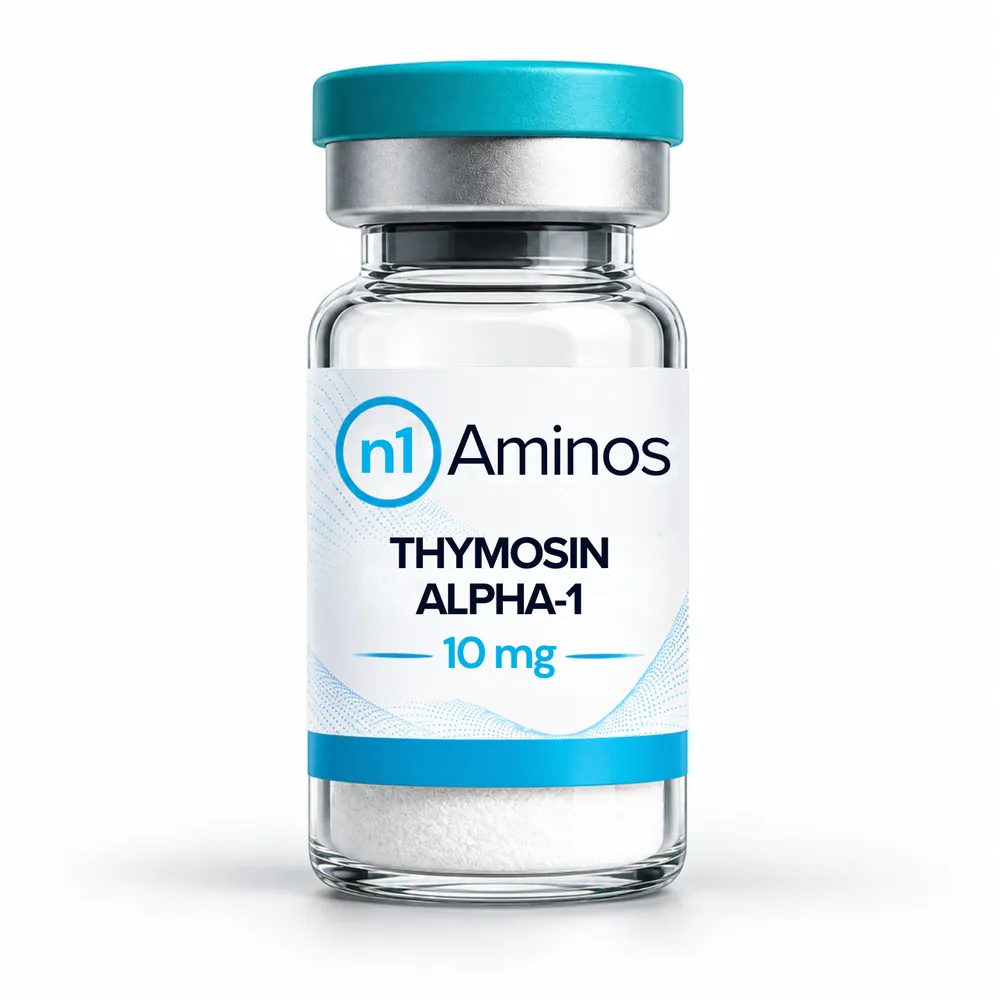
Thymosin Alpha-1 10MG
Third-party tested, lot traceable, ships in 3–5 business days.
Overview
Thymosin Alpha-1 is a 28-amino-acid immunomodulatory peptide that enhances T-cell maturation into CD4+ and CD8+ subsets, activates natural killer (NK) cells, increases major histocompatibility complex (MHC) antigen expression on infected cells for improved viral recognition, and suppresses pro-inflammatory cytokines IL-1β and TNF-α to prevent cytokine-storm pathology—yielding superior antiviral efficacy across hepatitis B/C, HIV, and COVID-19 without immunosuppression risks.
Clinical mechanisms include increased expression of heat shock proteins protecting cells from stress, enhanced dendritic cell maturation through toll-like receptor activation, stimulation of phagocytosis by macrophages, and prevention of lymphopenia through activated T-cell proliferation support. Studies show 25 critically ill COVID-19 patients receiving daily Thymosin Alpha-1 for one week prevented lymphopenia versus untreated controls. Long-term high-dose therapy proved more effective than single administrations. For viral infections, immune reconstitution after chemotherapy, chronic hepatitis, or prevention of severe infection progression, Thymosin Alpha-1 offers proven immune enhancement without broad immunosuppression.
Studied benefits
- A potent immune modulator that enhances T-cell function and overall immune competence
- It is well-regarded for its high safety profile even at experimental high doses over long periods
Reported side effects
- Exceptionally well-tolerated
- the most frequent adverse effect is simply mild irritation or redness at the injection site
Protocol
Dosing Schedule (Subcutaneous)
Educational reference only. Not medical advice. Research compounds are not approved for human use. Full disclaimer.
Thymosin Alpha-1 (5mg)
Reconstitute with 3.0 mL bacteriostatic water (Final concentration: ~1.67 mg/mL).
Support immune modulation and enhance host defense mechanisms through T-cell maturation.
Thymosin Alpha-1 (10 mg)
Reconstitute with 3.0 mL bacteriostatic water (Final concentration: ~3.33 mg/mL).
Support immune modulation and enhance host defense mechanisms.
| Week | Daily Dose (mcg) | Draw at 1.67 mg/mL | Log |
|---|---|---|---|
| Week 1 | 300 mcg (0.3 mg) | 18 units (0.18 mL) | + Log |
| Weeks 2–8 | 500 mcg (0.5 mg) | 30 units (0.3 mL) | + Log |
Frequency
Once per day (subcutaneous).
Timing
Consistent daily schedule; rotate injection sites.
Cycle length
8–12 weeks.
Unit calculator
Set your vial and water; the table above updates.
1.67 mg/mL
16 doses of 300 mcg per vial
At the starting dose (300 mcg × 7/week for a 8-week cycle) you would use about 16.8 mg, i.e. 4 × 5 mg vials. Higher phases use proportionally more.
Assumes a U-100 insulin syringe (100 units = 1 mL). Educational math only; verify every calculation yourself.
Context
Lifestyle considerations
Maintain a diet rich in vitamins C and D to work synergistically with this potent immunomodulator in enhancing the body’s defense against viral and bacterial pathogens. Ensure 7–9 hours of quality sleep to allow the immune system to enter its peak surveillance and repair phase, which is heavily influenced by TA-1 signaling. Stay physically active to support healthy circulation and immune cell migration throughout the body. Avoid alcohol, smoking, and processed foods, which generate oxidative stress and systemic inflammation that can impair the peptide’s ability to restore immune balance and reduce the burden of chronic infections.
Evidence
Research summaries
Immune Modulation with Thymosin Alpha 1 Treatment
Findings: Wakes up dendritic cell scouts in your immune system, makes them send stronger messages to fighter T-cells, helps your body fight germs, cancer, and infections way better.
The key to Tα1's power is something called a Toll-like receptor—think of these as doorbells on immune cells. When Tα1 rings the doorbell, it activates two important types of immune cells: myeloid dendritic cells and plasmacytoid dendritic cells. Once these cells wake up, they flood the bloodstream with messenger proteins (cytokines) that tell fighter T-cells and natural killer (NK) cells to get to work. When you're sick with a serious infection, take chemotherapy for cancer, or get really old, your immune scouts get sleepy and lazy. They stop sounding the alarm, so your fighter cells don't know there's a problem. Tα1 is like smacking the snooze button and screaming "Wake up!" Within hours of getting Tα1, your dendritic cells are firing on all cylinders, and your fighter cells wake up and start hunting for trouble.
Read the study ↗Thymosin alpha 1: A comprehensive review of the literature
Findings: Fixes weak immunity in sick and old people, helps COVID and cancer patients, safe to use for decades with almost no bad side effects.
Scientists looked at all the big studies on Tα1 going back many years. They found that Tα1 grows T-cells, calms over-reactions in COVID (when immune cells get confused and attack your own body), and boosts cancer treatments. Used for weak immune states from any reason, it repairs damage from too many fighter cells going crazy and prevents T-cell exhaustion (when fighter cells get so tired they just give up). During COVID-19, the sickest patients didn't die from the virus alone—they died because their immune system either shut down completely or went crazy and attacked their own lungs. Tα1 is perfect for this because it doesn't just activate the immune system blindly—it activates it smart and balanced.
Read the study ↗Thymosin alpha 1 treatment for patients with sepsis
Findings: Cuts death risk in blood poisoning by waking up sleeping fighter cells, grows back low immune cell counts, stops extra dangerous infections from starting.
One of the scariest situations in hospitals is sepsis—when a bad infection spreads through your whole body and your organs start shutting down. It's like a house fire that spreads to the whole neighborhood. Doctors can give antibiotics to kill the germs, but if the patient's immune system is too weak to fight back, they die anyway. When doctors gave sepsis patients Tα1, something amazing happened. The T-cells in their blood woke up and started fighting, the number of immune markers on monocytes (another type of fighter cell) jumped way up, and patients had way fewer second infections and better survival rates. The peptide basically said to the sleepy immune system: "Your body is burning down—wake up and fight!" And it worked. Thymosin Alpha-1 is like your immune system's greatest motivational coach—it wakes up sleeping fighters, organizes them smartly, and gets them fighting without letting them go crazy. For blood poisoning, serious infections, and immune weakness from age or sickness, Tα1 is a proven hero that's saved millions of lives over 40+ years.
Read the study ↗Identification
Chemistry
- common names
- Thymosin Alpha-1, Thymosin α1, Thymosin-α1, Tα1, Thymalfasin (INN - International Nonproprietary Name), Zadaxin (brand name in some jurisdictions)
- cas
- 62304-98-7 (free base)
- source
- Natural extraction from calf thymus tissue, followed by chemical synthesis; now commercially synthesized using solid-phase peptide synthesis
- biosynthesis
- Nonribosomal; isolated from thymic epithelial cell secretions or chemically synthesized
- type
- Linear polypeptide chain (not cyclic); 28 amino acid residues
Keep exploring
Related peptides
ARA-290
ARA290 · Cibinetide
- Route
- Subcutaneous
- Dose
- 4 mg – 8 mg
- Cycle
- 4–8 weeks
Glutathione
- Route
- Subcutaneous
- Dose
- 150 mg – 600 mg
- Cycle
- 4–8 weeks
Klow – BPC-157, TB-500, KPV, GHK-Cu
- Route
- Subcutaneous
- Dose
- 200 mcg – 2 mg
- Cycle
- 8–12 weeks
KPV (Ac-KPV-NH2)
Ac-KPV-NH2
- Route
- Subcutaneous
- Dose
- 200 mcg – 500 mcg
- Cycle
- 8–12 weeks