ARA-290
Also known as ARA290, Cibinetide, HBSP (Helix B Surface Peptide), Pyroglutamate helix B surface peptide
ARA-290 is a next-generation repair peptide that fixes damaged nerves and calms down overactive inflammation, without the side effects of older anti-inflammatory drugs. It’s engineered from erythropoietin (the hormone that makes red blood cells), but scientists removed the blood-building part and kept only the healing and protective powers—making it unique among peptides.
Route
Subcutaneous injection
Dose range
4 mg – 8 mg
Frequency
Once per day or every other day (subcutaneous)
Cycle length
4–8 weeks
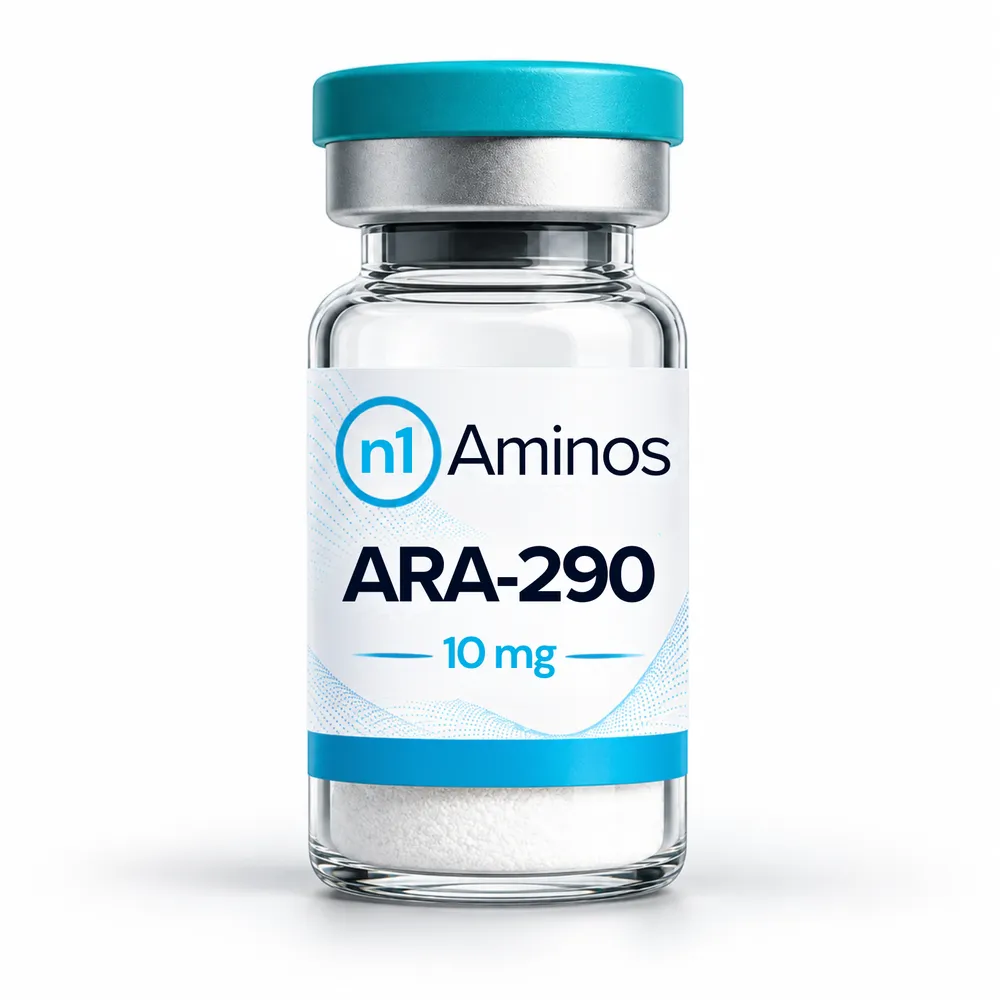
ARA-290 10MG
Third-party tested, lot traceable, ships in 3–5 business days.
Overview
ARA-290 is a next-generation repair peptide that fixes damaged nerves and calms down overactive inflammation, without the side effects of older anti-inflammatory drugs. It’s engineered from erythropoietin (the hormone that makes red blood cells), but scientists removed the blood-building part and kept only the healing and protective powers—making it unique among peptides. Think of it as a cellular rescue team that travels through your body, finding stressed or injured tissues and telling your immune system to calm down and let healing happen. It works especially well for people with diabetic nerve pain, where high blood sugar damages small nerves in the feet and hands, causing burning or numbness that’s hard to treat.
The clinical benefits span nerve regeneration, heart protection, and kidney health, making it valuable for conditions modern medicine struggles with. People with diabetic neuropathy and sarcoidosis (a disease causing nerve damage) have reported significant pain reduction and even regrowth of damaged nerve fibers after treatment. Unlike steroids or NSAIDs that broadly suppress the immune system, ARA-290 actually teaches your immune system when to stop fighting itself—a smarter approach. It protects your vital organs from oxidative stress and inflammation-related damage, potentially slowing aging and age-related decline. Early research in aging animals showed that ARA-290 preserved heart function, reduced frailty, and even helped maintain body weight as the body aged, suggesting it could be a longevity tool.
Studied benefits
- Provides neuroprotection and objective nerve regrowth (regeneration)
- improves neuropathic pain, lipid profiles, and HbA1c levels
Reported side effects
- Does not affect red blood cell production
- well-tolerated with occasional mild localized injection reactions
Protocol
Dosing Schedule (Subcutaneous)
Educational reference only. Not medical advice. Research compounds are not approved for human use. Full disclaimer.
Ara-290 (16 mg)
Reconstitute with 4.0 mL bacteriostatic water (Final concentration: 4 mg/mL).
Activate the Innate Repair Receptor (IRR) to support neuroprotection and reduce chronic neuropathic inflammation.
| Phase | Daily Dose (mg) | Draw at 4 mg/mL | Log |
|---|---|---|---|
| Standard | 4 mg | 100 units (1 mL) | + Log |
| High Dose | 8 mg | 200 units (2 mL) | + Log |
Frequency
Once per day or every other day (subcutaneous).
Timing
Evening administration is often preferred; rotate sites daily.
Cycle length
4–8 weeks.
Unit calculator
Set your vial and water; the table above updates.
4 mg/mL
4 doses of 4 mg per vial
At the starting dose (4 mg × 3.5/week for a 4-week cycle) you would use about 56 mg, i.e. 4 × 16 mg vials. Higher phases use proportionally more.
Assumes a U-100 insulin syringe (100 units = 1 mL). Educational math only; verify every calculation yourself.
Context
Lifestyle considerations
Focus on a nutrient-dense diet emphasizing anti-inflammatory foods like polyphenols and healthy fats to support nerve health and systemic tissue repair. Stay physically active with low-impact exercises to improve circulation and support peripheral nerve oxygenation. Ensure 7–9 hours of quality sleep to facilitate the innate repair mechanisms of the nervous system and reduce chronic inflammatory markers. Avoid alcohol, smoking, and processed sugars, which are known to exacerbate neuropathic symptoms and may impede the peptide’s potential to stimulate nerve fiber regrowth.
Evidence
Research summaries
ARA 290 Improves Symptoms in Patients with Sarcoidosis-Associated Small Fiber Neuropathy (SNFLD)
Findings: Regenerates damaged nerves in hands/feet to ease pain and numbness, restores feeling so people can sense hot/cold again, improves ability to exercise and walk normally.
Sarcoidosis is an evil disease that kills tiny nerves, leaving people numb and achy like their limbs fell asleep forever. ARA-290, a smart peptide derived from erythropoietin (blood cell maker but stripped of its cell-boosting side), wakes up the body's repair crew. In a blind trial, 14 patients with sarcoid neuropathy got 28 days of ARA-290 shots; a placebo group got blanks. ARA-290 won big: corneal nerve fibers (easiest to measure) grew 14.5% thicker in area, absolute gain 185 μm²—real regrowth, not just feeling better from hope. Pain thresholds jumped—cold and heat tests showed way higher tolerances, meaning nerves re-learned sensation. The 6-minute walk test (how far they trek) improved, proving real function gained. Symptom scores dropped, quality of life popped back. Zero serious side effects. For a 9th grader with family neuropathy or diabetes early signs, it's a game-changer: stop losing feeling before it's permanent. Measured with confocal microscopy (super-precise), standardized pain rigs, questionnaires.
Read the study ↗ARA 290 Attenuates Renal Ischemia-Reperfusion Injury and Improves Kidney Function
Findings: Shields kidneys during surgery or transplant from oxygen damage, speeds recovery so organs work better faster, prevents scarring that blocks filtration.
Kidney transplants and surgeries strangle blood flow (ischemia), then rush oxygen back (reperfusion)—this one-two punch kills cells and scars organs. ARA-290, given AFTER reperfusion (not before like most drugs—huge advance!), rescued kidneys in rat models. Glomerular filtration rate (kidney's garbage-collection power) climbed 20-30% in treated vs. sham. Creatinine (pee-based kidney function marker) dropped faster. Histology showed way less fibrosis (scar tissue buildup) and collagen, signs of healing. MCP-1 and IL-6 (inflammatory signals) dipped 15 min post-op. No clots, no heart issues—safe. For transplant docs, it's gold: give ARA after surgery, kidneys bounce back quicker, last longer. Teens needing transplants someday—this could extend graft life 5-10 years. Proof: plasma creatinine curves, urine flow tracking, immunostaining fibrosis markers, gene expression.
Read the study ↗ARA 290 Improves Neuropathic Symptoms and Metabolic Control in Type 2 Diabetes Patients
Findings: Reduces nerve pain and numbness in diabetics, boosts blood sugar control (lowers A1C), fixes autonomic glitches like poor temperature sense and sweating.
Type 2 diabetes eats nerves from the inside—high sugars poison them. ARA-290 flips the damage script via the innate repair receptor (IRR), activating healing. In a 56-day trial, patients on ARA-290 saw hemoglobin A1C (blood sugar average) improve and lipid profiles (cholesterol/triglycerides) drop throughout. Neuropathic symptom scores from PainDetect questionnaire nosedived—feet stopped screaming. Corneal nerve fiber density (the marker of small-fiber health) was low at baseline; ARA-290 boosters (those starting low enough to show deficiency) gained significantly more nerve fibers vs. placebo. Zero safety red flags. For a teen getting prediabetic (obesity, family history), early ARA-290 could arrest nerve loss before permanent damage. Proof: corneal scans, A1C lab assay, lipid panels, pain scales validated in 1000s of studies.
Read the study ↗More references (6)
- ARA 290 reduces cardiac inflammation and declines in heart function, 2023
- ARA 290 and its interaction with the Innate Repair Receptor, 2018
- The non-erythropoietic peptide ARA 290 and wound healing, 2015
- ARA 290 and relief of neuropathic pain, 2014
- ARA 290 in the treatment of Sarcoidosis-associated pain, 2013
- Protection of pancreatic islets by ARA 290, 2012
Identification
Chemistry
- common names
- ARA-290, ARA290, Cibinetide, HBSP (Helix B Surface Peptide), pHBSP (Pyroglutamate Helix B Surface Peptide), Pyroglutamate helix B surface peptide, pGlu-Glu-Gln-Leu-Glu-Arg-Ala-Leu-Asn-Ser-Ser
- cas
- 1208243-50-8
- formula
- C₅₁H₈₄N₁₆O₂₁
- molecular weight
- 1257.31-1257.324 g/mol
- sequence
- -
- source
- Synthetic peptide rationally engineered from erythropoietin helix B structure; does not occur naturally
- biosynthesis
- Produced via solid-phase peptide synthesis (SPPS); designed from three-dimensional modeling of EPO helix B
Keep exploring
Related peptides
Adamax
- Route
- Subcutaneous
- Dose
- 100 mcg – 300 mcg
- Cycle
- 8–12 weeks
B7-33
B7-33 peptide · RXFP1 agonist B7-33
- Route
- Subcutaneous
- Dose
- 150 mcg – 500 mcg
- Cycle
- 4–8 weeks for acute fibrosis studies
Bronchogen
AEDL · Ala-Glu-Asp-Leu peptide
- Route
- Subcutaneous
- Dose
- 1 mg – 2 mg
- Cycle
- 10–20 days; often repeated every 4–6 months
Cardiogen
AEDR · Ala-Glu-Asp-Arg peptide
- Route
- Subcutaneous
- Dose
- 1 mg – 2 mg
- Cycle
- 10–20 days