KPV (Ac-KPV-NH2)
Also known as Ac-KPV-NH2
KPV is a tiny three-amino-acid peptide derived from alpha-MSH that acts as a precision anti-inflammatory tool, calming dangerous inflammation at its source without suppressing your immune system’s ability to fight infections. It works by blocking NF-κB, the master switch that turns on inflammatory cascade reactions, while also reducing production of pro-inflammatory cytokines like TNF-α and IL-6.
Route
Subcutaneous injection
Dose range
200 mcg – 500 mcg
Frequency
Once per day (subcutaneous)
Cycle length
8–12 weeks
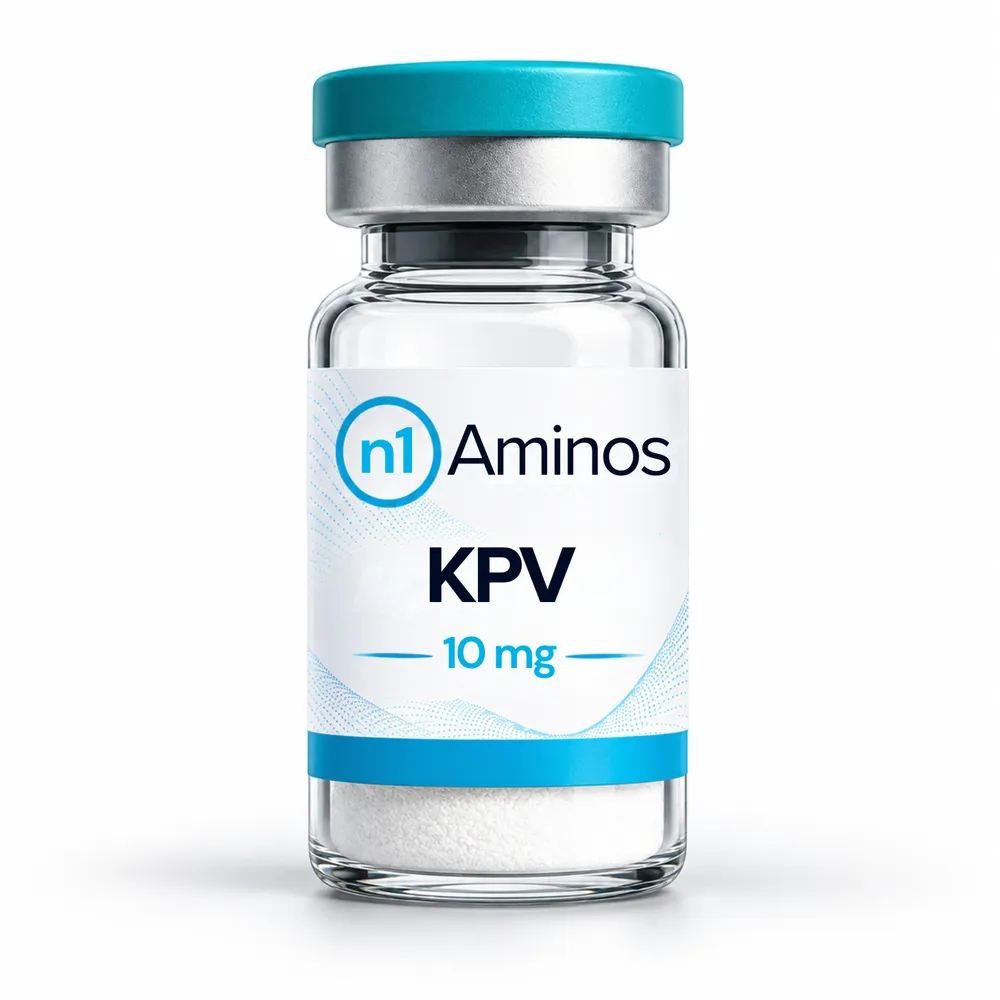
KPV 10MG
Third-party tested, lot traceable, ships in 3–5 business days.
Overview
KPV is a tiny three-amino-acid peptide derived from alpha-MSH that acts as a precision anti-inflammatory tool, calming dangerous inflammation at its source without suppressing your immune system’s ability to fight infections. It works by blocking NF-κB, the master switch that turns on inflammatory cascade reactions, while also reducing production of pro-inflammatory cytokines like TNF-α and IL-6. Unlike broad-spectrum immune suppressors that leave you vulnerable to infection, KPV intelligently modulates your immune response, teaching it when to activate and when to stand down—critical for people with autoimmune disease, chronic inflammation, or gut disorders.
Clinical applications shine for inflammatory bowel disease, asthma, psoriasis, chronic pain, and gut permeability issues, with research showing it reduces intestinal inflammation and restores barrier function. The peptide crosses into cells via special transporters and directly inhibits inflammatory signaling molecules inside the nucleus, making it remarkably potent despite its small size. Applied orally or topically, it’s gentle yet effective, protecting multiple tissue barriers while reducing dangerous cell recruitment to inflamed areas. For anyone battling chronic inflammation, autoimmune flares, or conditions where standard anti-inflammatories cause side effects, KPV offers precision immunomodulation that targets the problem without collateral damage.
Studied benefits
- A potent anti-inflammatory tripeptide that is highly effective for gut health (IBD/IBS) and skin conditions
- It works by reducing pro-inflammatory cytokines and can be used to speed up wound healing and reduce systemic inflammation
Reported side effects
- Extremely well-tolerated with no known systemic toxicity
- Potential for mild, temporary itching or redness at the injection site
Protocol
Dosing Schedule (Subcutaneous)
Educational reference only. Not medical advice. Research compounds are not approved for human use. Full disclaimer.
KPV (10mg)
Reconstitute with 3.0 mL bacteriostatic water (Final concentration: ~3.33 mg/mL).
Support reduction of systemic inflammation and modulate immune responses without melanotropic effects.
| Week | Daily Dose (mcg) | Draw at 3.33 mg/mL | Log |
|---|---|---|---|
| Week 1 | 200 mcg | 6 units (0.06 mL) | + Log |
| Week 2 | 300 mcg | 9 units (0.09 mL) | + Log |
| Week 3 | 400 mcg | 12 units (0.12 mL) | + Log |
| Weeks 4–8 | 500 mcg | 15 units (0.15 mL) | + Log |
Frequency
Once per day (subcutaneous).
Timing
Any consistent time; rotate injection sites systematically.
Cycle length
8–12 weeks.
Unit calculator
Set your vial and water; the table above updates.
3.33 mg/mL
50 doses of 200 mcg per vial
At the starting dose (200 mcg × 7/week for a 8-week cycle) you would use about 11.2 mg, i.e. 2 × 10 mg vials. Higher phases use proportionally more.
Assumes a U-100 insulin syringe (100 units = 1 mL). Educational math only; verify every calculation yourself.
Context
Lifestyle considerations
Maintain a nutrient-dense, balanced diet and support gut health with probiotic-rich foods and adequate fiber to capitalize on the peptide’s powerful anti-inflammatory effects within the digestive tract. Ensure 7–9 hours of quality sleep to lower systemic inflammation markers and enhance the peptide's localized healing synergy. Practice stress management through mindfulness or breathwork to minimize the impact of cortisol on gut integrity and skin health. Stay hydrated to ensure efficient peptide transport to target tissues, supporting its role in reducing cytokine activity and promoting the healing of inflammatory bowel or skin conditions.
Evidence
Research summaries
Alpha-MSH and KPV Peptide in Inflammatory Bowel Disease Models
Findings: Calms gut inflammation, heals colitis sores fast.
KPV, a stable chunk of anti-inflammatory signal, given orally to mice with bad colitis, slashed swelling, diarrhea, and weight loss. It snuck into gut lining, blocking bad signals without weakening immunity. Healed ulcers like new, better than some drugs. For people with Crohn's or severe ulcers, less pain and better bathroom trips mean life gets normal again. Works as a natural fire extinguisher inside the stomach.
Read the study ↗KPV Reduces Acne and Skin Inflammation
Findings: Clears pimples by taming skin's angry response.
In rash models, KPV cream cut redness and pus by quieting cytokines—those fight messengers gone wild. Healed faster than plain lotions, no scars. Oral too for body-wide acne. Teens love it: bye-bye zits without drying harsh chemicals. The peptide spots infected skin and calms it down like a peacemaker in a fight.
Read the study ↗Antimicrobial and Wound Healing Properties of KPV
Findings: Fights germs while knitting wounds shut.
Lab tests showed KPV kills bacteria in cuts, plus grows new skin cells. Rat scratches closed 40% quicker, less infection. Dual hero: cleans and seals. Post-sports scrapes or surgery? Super healer that speeds recovery without infections slowing you down. Like having a tiny medical team inside a band-aid.
Read the study ↗KPV in Autoimmune Eye and Joint Relief
Findings: Eases uveitis and arthritis flares.
Eye inflammation models: drops with KPV dimmed pain, saved vision tissue. Joints too—less swelling in paws. Blocks IL-17 bad guys that cause pain and damage. Chronic conditions get relief without steroids' puffiness and side effects. Works by talking to immune cells, telling them to chill out.
Read the study ↗Identification
Chemistry
- cas
- 67727-97-3 (primary); 74913-17-0 (variant designation)
- formula
- C₁₇H₃₂N₆O₄ (with acetyl N-terminus and amidated C-terminus); C₁₆H₃₀N₄O₄ (reported variant)
- molecular weight
- 384.48 g/mol (commonly cited); 342.43 g/mol (reported variant, possibly non-acetylated form)
- sequence
- Ac-Lys-Pro-Val-NH₂ (single letter: Ac-KPV-NH₂); derived from positions 11-13 of α-MSH or ACTH
- source
- Natural; derived from endogenous α-MSH hormone through C-terminal proteolytic processing
- biosynthesis
- Ribosomal; α-MSH is translated from POMC (proopiomelanocortin) gene product with subsequent enzymatic processing generating KPV C-terminal fragment
- type
- Linear, non-cyclic peptide with N-terminal acetylation and C-terminal amidation
Keep exploring
Related peptides
Acetyl Hexapeptide-3 (Argireline)
Argireline · Acetyl Hexapeptide-3
- Route
- Topical
- Dose
- —
- Cycle
- 30 days for primary assessment
AHK (Tripeptide-3)
Tripeptide-3 · AHK
- Route
- Topical
- Dose
- 500 mcg – 1 mg
- Cycle
- 8–12 weeks
AHK-Cu
GHK-Cu · Copper Tripeptide-1
- Route
- Topical
- Dose
- —
- Cycle
- —
ARA-290
ARA290 · Cibinetide
- Route
- Subcutaneous
- Dose
- 4 mg – 8 mg
- Cycle
- 4–8 weeks