Tirzepatide
Also known as LY3298176, Tilpotide, GIP/GLP-1 receptor agonist, dual incretin receptor agonist
Tirzepatide is a dual GIP/GLP-1 receptor agonist peptide combining glucose-dependent insulinotropic peptide (GIP) and glucagon-like peptide-1 (GLP-1) mechanisms to deliver superior weight loss and metabolic improvement versus single-agonist therapy, achieving 20.9% weight loss (40-50+ pounds) over 18 months with HbA1c reductions of 2.58% in type 2 diabetes—the most potent single metabolic agent currently available.
Route
Subcutaneous injection
Dose range
2.5 mg – 7.5 mg
Frequency
Cycle length
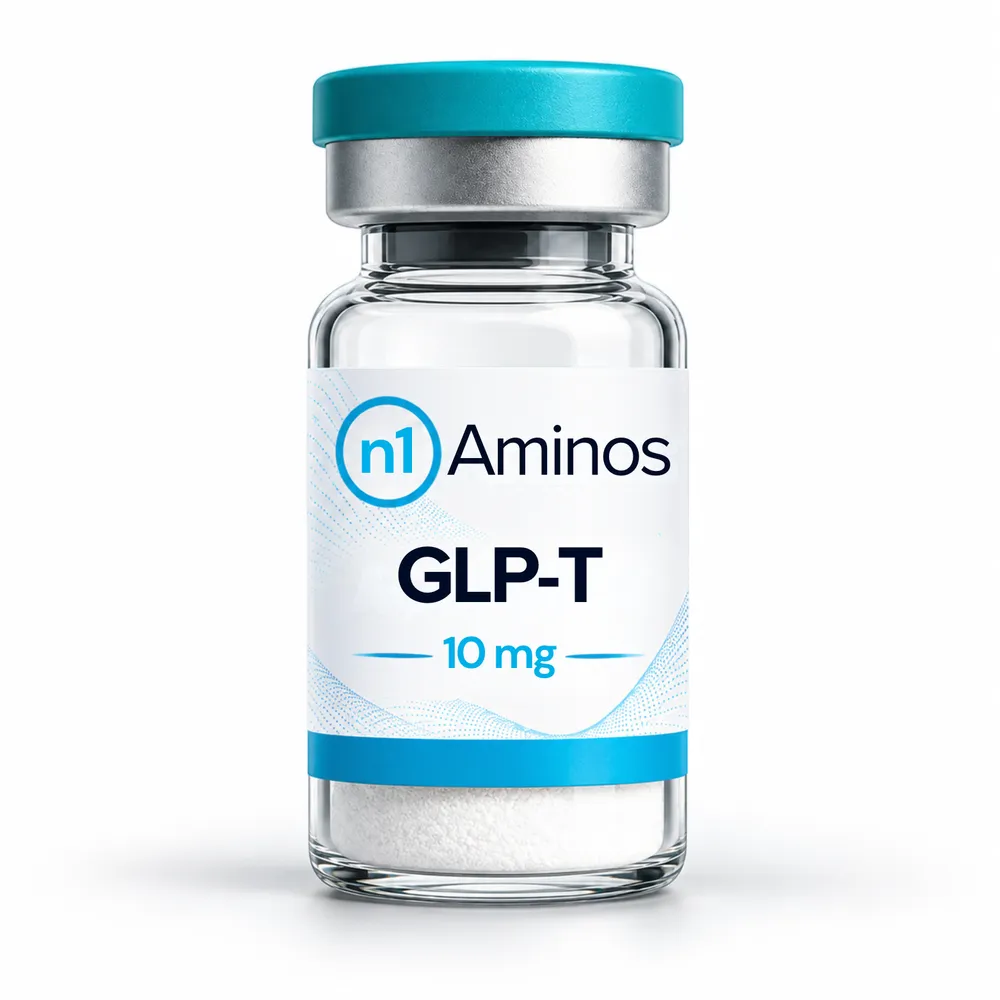
GLP-T 10MG
5 sizes available, from $29.00
Overview
Tirzepatide is a dual GIP/GLP-1 receptor agonist peptide combining glucose-dependent insulinotropic peptide (GIP) and glucagon-like peptide-1 (GLP-1) mechanisms to deliver superior weight loss and metabolic improvement versus single-agonist therapy, achieving 20.9% weight loss (40-50+ pounds) over 18 months with HbA1c reductions of 2.58% in type 2 diabetes—the most potent single metabolic agent currently available.
Triple mechanism: GLP-1 suppresses appetite, improves glucose sensitivity, and delays gastric emptying; GIP enhances insulin secretion response to glucose and reduces triglycerides; combined effect produces superior metabolic restoration impossible with either alone. Trials show 68.4% of participants achieved >10% weight loss versus 23% with semaglutide alone. Weekly injection protocol offers simplicity. Superior improvements in insulin secretion and fasting glucose versus semaglutide position it as next-generation obesity and diabetes therapy. Gastrointestinal side effects (nausea, constipation) are transient and dose-manageable. For individuals with obesity, type 2 diabetes, or metabolic syndrome, Tirzepatide represents the highest-efficacy metabolic peptide available.
Studied benefits
- A "next-generation" peptide that combines GLP-1 and GIP agonism, resulting in superior weight loss (up to 11kg more than standard GLP-1s) and significant blood sugar (HbA1c) reductions
- It also supports better blood pressure and lipid levels
Reported side effects
- Primarily gastrointestinal (nausea, constipation, diarrhea)
- These effects are dose-dependent and typically manageable with a slow, gradual increase in dosage
Protocol
Dosing Schedule (Subcutaneous)
Educational reference only. Not medical advice. Research compounds are not approved for human use. Full disclaimer.
Tirzepatide (5mg)
Reconstitute with 2.0 mL bacteriostatic water (Final concentration: 2.5 mg/mL).
Support glycemic control, weight management, and metabolic health through dual GIP and GLP-1 receptor activation.
Tirzepatide (10mg)
Reconstitute with 2.0 mL bacteriostatic water (Final concentration: 5.0 mg/mL).
Support glycemic control and weight management through dual incretin receptor activation.
Tirzepatide (15mg)
Reconstitute with 2.0 mL bacteriostatic water (Final concentration: 7.5 mg/mL).
Support glycemic control, weight management, and metabolic health through dual GIP and GLP-1 receptor activation.
Tirzepatide (30mg)
Reconstitute with 3.0 mL bacteriostatic water (Final concentration: 10.0 mg/mL).
Efficient management of glycemic control and metabolic parameters with high-concentration dosing.
Tirzepatide + BPC-157 (10mg/5mg Blend)
Reconstitute with 2.0 mL bacteriostatic water (Conc: 5 mg/mL Tirzepatide | 2.5 mg/mL BPC).
Support metabolic health and weight loss while mitigating potential GI discomfort with BPC-157.
Tirzepatide + BPC-157 (20mg/10mg Blend)
Reconstitute with 2.0 mL bacteriostatic water (Conc: 10 mg/mL Tirzepatide | 5 mg/mL BPC).
Advanced metabolic support and gastro-protective healing for high-dose research.
| Week | Tirzepatide Dose (mg) | Draw at 2.5 mg/mL | Log |
|---|---|---|---|
| Units (mL) | Weeks 1–4 | 2.5 mg | + Log |
| 1,250 mcg | 25 units (0.25 mL) | Weeks 5–8 | + Log |
| 5.0 mg | 2,500 mcg | 100 units (1 mL) | + Log |
| Weeks 9–12 | 7.5 mg | 300 units (3 mL) | + Log |
| 75 units (0.75 mL) | Weeks 13–16 | 10.0 mg | + Log |
- 5,000 mcg
- 100 units (1.00 mL)
- - Frequency: Once per week (subcutaneous).
- - Timing: Same day each week; rotate sites.
- - Cycle Length: 16+ weeks.
Unit calculator
Set your vial and water; the table above updates.
2.5 mg/mL
2 doses of 2.5 mg per vial
Assumes a U-100 insulin syringe (100 units = 1 mL). Educational math only; verify every calculation yourself.
Context
Lifestyle considerations
Maintain a high-protein, nutrient-dense diet to mitigate the risk of muscle loss while this dual GLP-1/GIP receptor agonist significantly reduces appetite and improves glycemic control. Incorporate regular resistance training to provide the necessary stimulus for muscle preservation during rapid weight loss and metabolic shifts. Ensure 7–9 hours of quality sleep to support metabolic health and prevent cortisol-driven hunger cues that can counteract the peptide’s satiety effects. Maintain optimal hydration and monitor for gastrointestinal side effects, utilizing small, frequent meals to manage the peptide’s delay in gastric emptying.
Evidence
Research summaries
Continued Treatment With Tirzepatide for Maintenance of Weight Reduction
Findings: Helps people keep off lost weight and supports ongoing weight control for those who are overweight or obese.
Imagine you've worked hard to lose weight through diet and exercise, but it's tough to keep it off. This study, called SURMOUNT-4, looked at a big group of adults who first lost weight using tirzepatide—a medicine given as a weekly shot. After that initial phase, some kept taking it while others switched to a fake shot (placebo). The ones who stayed on tirzepatide kept losing more weight or held steady, dropping an average of about 13% more body weight over a year compared to those who stopped. This shows tirzepatide isn't just for starting weight loss; it helps your body maintain the progress long-term by making you feel full longer and controlling blood sugar better. Side effects like nausea were mild for most, fading over time. For people struggling with obesity, this means a real tool to avoid the common "yo-yo" weight gain, improving health like lowering risks for heart disease and diabetes. Researchers ran this at 70 sites worldwide, proving it's reliable for everyday use.
Read the study ↗Weight Loss Efficiency and Safety of Tirzepatide: A Systematic Review
Findings: Big weight drops for people with type 2 diabetes or obesity, better than many other treatments, with manageable side effects.
Scientists combined results from 10 different studies with nearly 10,000 people to see how well tirzepatide works for weight loss. People taking it lost way more weight—up to 10 kg (about 22 pounds) more than those on placebo, other diabetes drugs, or insulin. Different doses (5mg, 10mg, 15mg weekly) all worked great, shrinking waist size and BMI too. It's like a double-team: tirzepatide acts on two hormones that tell your brain "I'm full" and help use sugar better. Common issues were tummy troubles like nausea or diarrhea, but serious problems were rare and less than other drugs. No big risks for low blood sugar either. For folks with diabetes who also battle extra weight, this could mean easier control of blood sugar and feeling healthier overall, reducing chances of complications like nerve damage or poor healing. This review pulls from trusted trials, making it solid evidence for doctors to consider it a top choice for safe, effective weight management.
Read the study ↗Clinical Outcomes of Tirzepatide or GLP-1 Receptor Agonists
Findings: Lowers risks of death and serious heart or kidney problems in people with type 2 diabetes.
In a huge real-world look at over 140,000 diabetes patients, those on tirzepatide had fewer deaths and fewer big problems with hearts (like attacks or strokes) or kidneys compared to similar drugs (GLP-1 agonists like semaglutide). It's like giving your body extra protection beyond just weight loss. Tirzepatide's unique action on two hunger-control hormones seems to offer broader health wins, helping blood vessels stay healthy and kidneys filter better. This wasn't a lab trial but data from actual doctor visits, so it shows what happens outside perfect study conditions. For someone with diabetes, this translates to living longer and avoiding hospital stays, especially if overweight. Benefits kick in steadily, with strong stats backing it up—no flukes here. It's a game-changer for managing diabetes holistically, not just sugar levels.
Read the study ↗Tirzepatide Once Weekly for the Treatment of Obesity - SURMOUNT-1
Findings: Major weight loss (up to 22% of body weight) in overweight or obese adults without diabetes.
This phase 3 trial tested tirzepatide on over 2,500 people who were overweight or obese but not diabetic, pairing it with healthy eating and exercise advice. After 72 weeks, folks on higher doses lost 15-22% of their starting weight—think 35-50 pounds for a 250-pound person—versus just 2-3% on placebo. More than half hit 20% loss, a tough goal. It curbs appetite, slows digestion, and stabilizes energy use. Heart health markers improved too, like better cholesterol. Side effects were mostly mild gut issues that eased up. For teens or adults facing obesity stigma and health woes (sleep apnea, joint pain), this offers hope: real, lasting change without surgery. Conducted across 9 countries, it's gold-standard proof tirzepatide tackles obesity head-on, potentially cutting risks for many diseases.
Read the study ↗Identification
Chemistry
- common names
- Tirzepatide, LY3298176, Tilpotide, GIP/GLP-1 receptor agonist, dual incretin receptor agonist
- cas
- 2023788-19-2
- formula
- C₂₂₅H₃₄₈N₄₈O₆₈
- molecular weight
- 4813.45 Da (or g/mol)
- source
- Synthetic; rationally designed from human GIP sequence, not naturally occurring
- biosynthesis
- Nonribosomal synthetic peptide manufactured by solid-phase peptide synthesis
- type
- Linear peptide chain (not cyclic), amidated at the C-terminus
Keep exploring
Related peptides
5-Amino-1MQ
5-amino-1-methylquinolinium · NNMTi
- Route
- Subcutaneous
- Dose
- 2.5 mg – 5 mg
- Cycle
- 10–20 days (based on a single 50 mg vial)
Adipotide (FTPP)
FTPP · Adipotide
- Route
- Subcutaneous
- Dose
- 5 mcg – 20 mcg
- Cycle
- 21–28 days; monitoring of renal markers is standard
AICAR
Acadesine · AICA-Riboside
- Route
- Subcutaneous
- Dose
- 1 mg – 3 mg
- Cycle
- 8–12 weeks
AOD-9604
AOD 9604 · Tyr-hGH fragment 177-191
- Route
- Subcutaneous
- Dose
- 200 mcg – 500 mcg
- Cycle
- 8–12 weeks