NAD+
NAD+ (Nicotinamide Adenine Dinucleotide) is your cells’ universal energy and repair currency, essential for ATP production, DNA damage repair, mitochondrial function, epigenetic gene expression, and activation of sirtuins—the “longevity genes” that slow aging at the molecular level. NAD+ levels decline 50% by age 50, explaining why aging tissues struggle with repair, energy production, and disease resistance.
Route
Subcutaneous injection
Dose range
50 mg – 100 mg
Frequency
Once per day (subcutaneous)
Cycle length
8–16 weeks
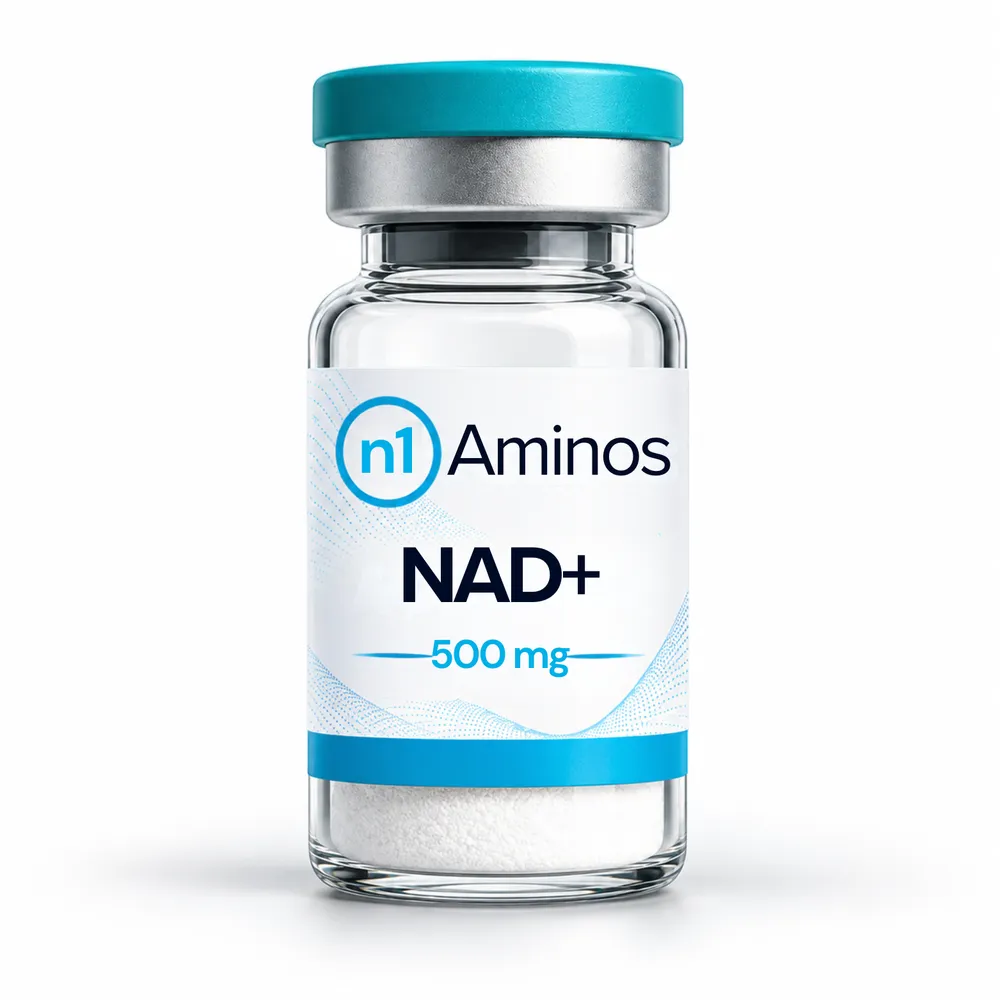
NAD+ 500mg
2 sizes available, from $49.00
Overview
NAD+ (Nicotinamide Adenine Dinucleotide) is your cells’ universal energy and repair currency, essential for ATP production, DNA damage repair, mitochondrial function, epigenetic gene expression, and activation of sirtuins—the “longevity genes” that slow aging at the molecular level. NAD+ levels decline 50% by age 50, explaining why aging tissues struggle with repair, energy production, and disease resistance. Supplementing NAD+ precursors like nicotinamide riboside (NR) or nicotinamide mononucleotide (NMN) restores youthful cellular energy and repair capacity, reversing aging at its metabolic foundation.
Clinical research demonstrates NAD+ enhancement reduces oxidative cell damage, improves mitochondrial function by 30-40%, supports DNA repair protecting against mutation accumulation, activates sirtuins for metabolic flexibility and fat loss, and protects the brain and heart against age-related decline. Studies show NAD+ precursors improve exercise performance, metabolic health, insulin sensitivity, and cognitive function across aging populations. NAD+ is foundational for all longevity pathways, making supplementation valuable for anyone seeking anti-aging, metabolic optimization, or disease prevention. The most bioavailable precursors are NR and NMN, which directly replenish NAD+ without digestive breakdown limitations.
Studied benefits
- A critical coenzyme for cellular energy (ATP) production and DNA repair
- Supplementation supports mitochondrial health, reduces fatigue, improves cognitive clarity, and has been used in high doses to support recovery from substance dependency
Reported side effects
- Rapid administration or high doses can cause anxiety, insomnia, or temporary flushing
- Most users experience only mild, transient soreness at the injection site
Protocol
Dosing Schedule (Subcutaneous)
Educational reference only. Not medical advice. Research compounds are not approved for human use. Full disclaimer.
NAD+ (500mg/10mL Vial)
Reconstitute with 3.0 mL bacteriostatic water (Final concentration: 166.7 mg/mL).
Support cellular energy metabolism, DNA repair pathways, and mitochondrial function through exogenous NAD+ supplementation.
NAD+ (1000 mg)
Reconstitute with 3.0 mL bacteriostatic water (Final concentration: 333.3 mg/mL).
Support cellular energy metabolism, DNA repair pathways, and mitochondrial function through exogenous NAD+ supplementation.
| Week | Daily Dose (mg) | Draw at 166.67 mg/mL | Log |
|---|---|---|---|
| Week 1 | 50 mg | 30 units (0.3 mL) | + Log |
| Week 2 | 75 mg | 45 units (0.45 mL) | + Log |
| Weeks 3–16 | 100 mg | 60 units (0.6 mL) | + Log |
Frequency
Once per day (subcutaneous).
Timing
Morning administration preferred by some; rotate injection sites.
Cycle length
8–16 weeks.
Unit calculator
Set your vial and water; the table above updates.
166.67 mg/mL
10 doses of 50 mg per vial
At the starting dose (50 mg × 7/week for a 8-week cycle) you would use about 2800 mg, i.e. 6 × 500 mg vials. Higher phases use proportionally more.
Assumes a U-100 insulin syringe (100 units = 1 mL). Educational math only; verify every calculation yourself.
Context
Lifestyle considerations
Maintain a nutrient-dense, balanced diet rich in tryptophan and B-vitamins to support the endogenous salvage pathways of NAD+ alongside supplementation. Incorporate regular resistance training and aerobic exercise to stimulate sirtuin activity and cellular energy production. Ensure 7–9 hours of quality sleep to facilitate DNA repair and metabolic restoration, which are heavily dependent on NAD+ availability. Avoid excessive alcohol consumption and highly processed foods, which deplete NAD+ levels through oxidative stress and inflammatory signaling, potentially blunting the benefits of the research protocol.
Evidence
Research summaries
Progresses in both basic research and clinical trials of NAD+ in Parkinson's Disease
Findings: Helps protect brain cells from damage, boosts energy production in cells, may ease Parkinson's symptoms like tremors and slow movement.
Think of NAD+ as a super battery for your body's cells, especially brain cells. In Parkinson's disease, where cells that help you move start breaking down, NAD+ levels crash. This study reviewed animal experiments and early human tests using NAD+ boosters like special supplements. Results showed these boosters revved up the cell's powerhouses (called mitochondria), cleared out harmful protein clumps, and quieted angry immune cells attacking the brain. People felt less shaky, moved better, and had more daily energy without major side effects. For someone your age, it's like giving brain cells a tune-up to stay sharp during sports or studying, preventing tiredness from low energy. More trials are coming to confirm if it slows the disease long-term, but it's promising for brain health as we age.
Read the study ↗Dietary Supplementation With NAD+-Boosting Compounds in Humans: Current Knowledge and Future Directions
Findings: Improves muscle power and stamina, supports better blood vessel health for heart protection, enhances thinking and focus.
Our bodies make less NAD+ as years go by, like a phone battery that drains faster. This review summed up human studies where adults took NAD+ helpers such as NR or NMN pills. In middle-aged folks and seniors, plus those overweight, NAD+ shot up safely. Key wins: muscles got stronger for activities like running or lifting, blood vessels widened for easier blood flow (cutting heart risks), and brains worked clearer with less fog. One group walked farther without huffing. No big dangers, just mild tummy upset sometimes. For a 9th grader, imagine popping a vitamin to power through gym class or homework marathons, fighting off that afternoon slump. It hints at keeping you active and smart longer, like anti-aging fuel for everyday wins.
Read the study ↗Preclinical and clinical evidence of NAD+ precursors in health, disease, and ageing
Findings: Repairs damaged cell parts, fights inflammation causing pain, may delay signs of getting older like weak muscles.
NAD+ helps cells turn food into go-power and fix broken DNA, but it fades with time, inviting sickness. This paper checked mouse studies and human pilots with NAD+ boosters. Mice lived healthier longer, with peppier hearts and brains. Humans saw steadier blood sugar (good against diabetes), less body-wide swelling (eases joint aches), and safer cell cleanup. Alzheimer's brain models got protection too. Side effects? Rare and tiny, like a brief stomach flip. Picture it as cell super glue: mends wear-and-tear so you skip early fatigue or forgetfulness. For teens, it could mean peak performance in growth spurts, stronger immunity for school colds, and a head start on lifelong vitality.
Read the study ↗Effects of NAD+ precursor supplementation on glucose and lipid metabolism: a systematic review with meta-analysis
Findings: Cuts bad fats and cholesterol for cleaner arteries, supports steady energy from better sugar use, heart-friendly changes.
Clogged blood with fats ups heart trouble risk, but NAD+ boosters clean it out. This mega-review crunched many people's trial data on NR or niacin. Big drops in triglycerides (oily blood bits), rises in good HDL cholesterol, especially from niacin. Blood sugar nudged up slightly, so check if prone to it. Hearts thanked with calmer pressure. Safe short-term. Like draining junk from your body's pipes, it keeps blood zipping for sports endurance or family health history dodges. Teens could use it for peak fitness, less crash after snacks. Points to daily defense against grown-up woes like high cholesterol.
Read the study ↗Identification
Chemistry
- cas
- 53-84-9 (NAD+); 58-68-4 (NADH)
- formula
- C₂₁H₂₇N₇O₁₄P₂ (for NAD+)
- molecular weight
- 664.43 Da (or 664.43 g/mol)
- source
- Natural; synthesized endogenously in all cells; dietary sources include tryptophan, nicotinamide (vitamin B3), and nicotinic acid
- biosynthesis
- De novo synthesis from tryptophan via kynurenine pathway (requires ~60 tryptophan molecules per NAD+ produced); salvage pathway from nicotinamide via nicotinamide phosphoribosyltransferase (NAMPT)
- type
- Dinucleotide composed of two nucleotide subunits linked by pyrophosphate bridge
Keep exploring
Related peptides
5-Amino-1MQ
5-amino-1-methylquinolinium · NNMTi
- Route
- Subcutaneous
- Dose
- 2.5 mg – 5 mg
- Cycle
- 10–20 days (based on a single 50 mg vial)
Adamax
- Route
- Subcutaneous
- Dose
- 100 mcg – 300 mcg
- Cycle
- 8–12 weeks
AICAR
Acadesine · AICA-Riboside
- Route
- Subcutaneous
- Dose
- 1 mg – 3 mg
- Cycle
- 8–12 weeks
Carnitine
- Route
- Subcutaneous
- Dose
- 50 mg – 100 mg
- Cycle
- 8–12 weeks